
Why Is Oud Perfume So Expensive? Inside the Supply Chain
A kilogram of high-grade Cambodian oud oil, distilled from the oldest trees, currently sells at wholesale for somewhere between forty and one hundred thousand US dollars.
Gold is around one hundred thousand dollars per kilogram at spot.
So a small vial of the right oud, gram for gram, can cost more than the same weight in gold. Not as a metaphor. As a straight commercial fact.
This is the only ingredient in perfumery that sits at that price tier. Rose de Mai, at its most expensive, is around eight thousand dollars a kilogram for pure absolute. Orris butter from Tuscany, after three years of rhizome aging, reaches about twenty thousand. Ambergris floats in the same range as oud but cannot be farmed. Real oud is in a category of its own, and the reason it sits there is not fashion. It is biology, geography, regulation, and economics stacked against anyone who wants to produce it.
Here is what is going on.
A tree that has to be sick to be useful
Oud is the resinous heartwood of the Aquilaria tree. Left alone, an Aquilaria produces soft pale wood that smells of nothing. It only produces oud when infected. Fungi like Phialophora parasitica or Aspergillus species enter the trunk through a wound, the tree responds by flooding the surrounding heartwood with a thick defensive resin, and over time that infected wood turns dark, heavy, and fragrant.
The critical number is time. Wild Aquilaria infection develops slowly. For commercial-grade resin you are looking at ten to fifteen years minimum. For the grade collectors actually chase, twenty-five to sixty years.
So the supply constraint begins at the root. Oud cannot be grown on demand. You can plant an Aquilaria sapling today and your children will harvest the first usable oud, if they are lucky.

The forests ran out before the demand did
Wild Aquilaria is disappearing. In 1995 it was added to CITES Appendix II, the global convention protecting species threatened by international trade. By 2004, Aquilaria malaccensis, historically the main source species, was considered commercially depleted across most of its native range. The next two decades saw the same story repeat in Vietnam, Cambodia, Thailand, and parts of Indonesia.
What remains in the wild is either illegal to harvest without CITES permits or physically unreachable. Legal wild oud at real quality is a luxury that has been drying up faster than substitute supply can replace it.
Distillation math nobody can argue with

Assume you have managed to source a quantity of resin-saturated Aquilaria wood. Now you need to turn it into oil. The traditional method is hydro-distillation: the wood is soaked, crushed, loaded into copper or stainless-steel stills, and steamed for several days.
The yield depends on the grade of the wood. Thin resin content gives almost nothing. Genuine high-grade wood produces about two grams of oil for every kilogram of wood distilled. At the very top end you can reach four or five grams per kilogram but this is rare.
Work the numbers forward.
- You need around ten to fifteen kilograms of good resin-saturated wood to produce twenty to thirty millilitres of oil.
- That wood came from a tree that took twenty years to mature.
- That tree was either harvested under CITES export permit or grown on a managed plantation that put twenty years of capital into the ground before any return.
- Then you added fuel, water, skilled labour, four to seven days of distillation time, and a master perfumer’s quality judgement.
The industry answer is price per millilitre. At real quality, pure oud oil runs between thirty and seventy US dollars per millilitre at the low end, and into the hundreds or low thousands for the finest aged distillations.
Why Cambodian oud costs more than Indonesian
The oud world classifies grades by origin, and each origin has its own smell profile, its own production style, and its own price tier.
Cambodi (Cambodian). Sweeter, softer, more balsamic, often with a honey or fig-paste quality. Considered the most wearable of the traditional grades. Most expensive wild grade at the very top of the market because Cambodian oud became a status term in the Gulf and demand outstripped supply.
Hindi (Indian Assam). The most intense. Dry, medicinal, camphoraceous, almost gasoline-like on first application. Takes decades to mature in the tree. Much beloved in the traditional Arabian market. Rare now because the Assam forests are heavily protected.
Thai / Trat. Dry, leathery, somewhere between Cambodi and Hindi in profile. A specialty grade with a devoted following.
Maroke (Malaysian / Borneo). Rounder, gentler, slightly sweeter wood character. Often used in modern niche perfumery because it is less confrontational on first impression. This is the grade that plantation supply is best able to replicate.
Papua. Newer origin that emerged as other forests declined. Sharp, woody, often used to extend other oud blends.
Vietnamese. Rare. Very smooth. Cherished by collectors but legal supply is tiny.
Price differences between origins reflect real differences in production cost, tree age, and smell quality. Nothing about it is marketing.
The plantation revolution and why it hasn’t made oud cheap

In the early 2000s a handful of companies gambled that demand for oud would keep climbing while wild supply collapsed. They planted large-scale Aquilaria plantations and developed techniques to inoculate the trees artificially, speeding up resin formation.
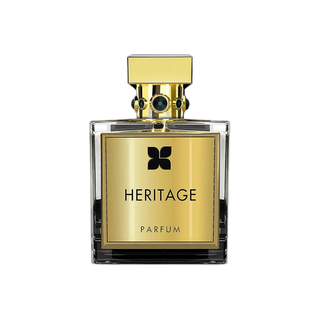
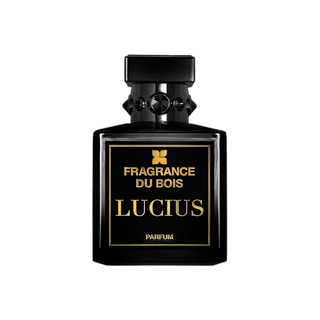
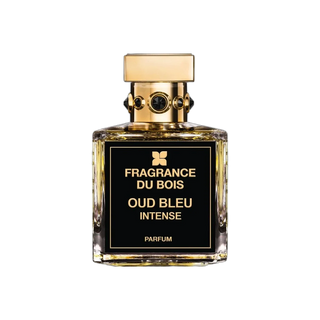
The most well-known is Fragrance Du Bois, whose parent company operates one of the largest ethical Aquilaria plantations in Malaysia. This is why Fragrance Du Bois can put real plantation oud into commercial perfumes at price points that would be impossible with wild material. Their Heritage Parfume, Lucius Parfum, and Oud Bleu Intense all use plantation oud as the central ingredient. The house is one of the very few in the world that can credibly say, for every bottle, exactly where the oud came from.
But plantation economics are not cheap. You still need to wait. Inoculation reduces the maturation period but does not eliminate it. Best-practice plantation oud still requires six to ten years of growth before first harvest, and the best grades still come from older trees. The capital locked up in a plantation for a decade is enormous, which is why plantation oud is affordable compared to wild oud but not cheap compared to any other perfumery ingredient.
What this means for the price of your perfume
When you see a niche release with oud as a headline note, the price of the finished bottle gives you most of the information you need about how much real oud is inside.
Rough price brackets in our market:
- Under AED 800. The “oud” is almost certainly a synthetic accord. Molecules like Kephalis, Iso E Super, Firsantol, and cypriol oil do most of the work. There may be a fraction of a percent of real oud, or none at all. The fragrance can still be beautiful. It is just not pure oud.
- AED 800 to 1,500. Likely a blend. Synthetic oud accord handles the bulk of the character, real oud is dosed at a small but detectable percentage to add depth and texture.
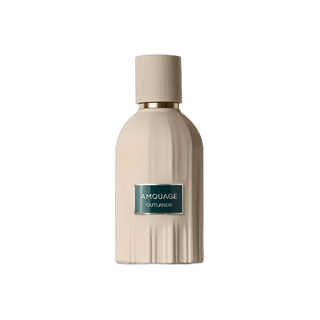
- AED 1,500 to 3,000. Now we are talking about genuine oud-forward compositions. Houses like Amouage Outlands and Fragrance Du Bois sit in this territory with real oud as a central note.
- AED 3,000 to 6,000. Heritage oud compositions. Clive Christian Private Collection Oud, Stephane Humbert Lucas God of Fire, and top-tier Fragrance Du Bois and Amouage releases. Real oud is the primary ingredient, often aged, and the price reflects actual material cost plus the house’s premium for composition.
- Above AED 6,000. Luxury market. Rare oud origins, aged oils, sometimes hand-filled bottles. Mostly houses like Clive Christian, Roja, and private commission work.
None of this is an argument that you need to spend AED 3,000 to enjoy oud. Synthetic oud accords have genuine artistic merit. Some of the greatest oud-themed perfumes of the last twenty years are mostly synthetic. But understanding the economics takes the mystery out of the price tag and lets you buy intentionally.
We cover how to tell the difference between synthetic and real oud at the smell level in our synthetic oud vs real oud breakdown.
The short version
Oud is expensive because:
- A healthy Aquilaria tree does not produce oud. Only sick trees do, and they need decades to mature their infection.
- Wild Aquilaria was added to CITES Appendix II in 1995 and most legal wild supply is now exhausted.
- Distillation yields are tiny. Ten kilograms of fine resinous wood produce twenty to thirty millilitres of oil.
- Plantation oud eased but did not solve the problem. You still need ten years of capital locked in the soil before your first harvest.
- Labour is specialist. Top distillers pass the craft down through generations and there are not many of them.
The result is an ingredient where the honest minimum wholesale price per millilitre of real oil is higher than almost anything else in perfumery. Everything downstream of that, from finished-perfume prices to the rise of synthetic alternatives, is a reaction to those five underlying facts.
If you want to see how the ingredient expresses itself in finished bottles across the price spectrum, our Oud Perfumes collection is the shortest path. For ten specific picks worth owning in 2026, read best oud perfumes 2026. And for the foundational briefing on what oud actually is at the wood-and-chemistry level, start with what is oud.
Frequently asked questions
How much does 1ml of real oud oil cost?
At real commercial quality, pure oud oil runs between thirty and seventy US dollars per millilitre at the lower grades, and into the hundreds or low thousands at the finest aged origins. Pure unblended oud is usually sold by artisan attar houses in small tola bottles, not in mainstream retail.
Why is Cambodian oud more expensive than Indonesian?
Because Cambodian oud oil is considered sweeter and more wearable by the Gulf market, which drives premium demand, and because legal Cambodian supply collapsed earlier than Malaysian plantation supply could scale. Malaysian and Indonesian oud from plantations is more abundant and therefore cheaper, even at comparable distillation quality.
Is plantation oud as good as wild oud?
Modern plantation oud at premium grade has narrowed the gap considerably, especially from mature plantations using traditional hydro-distillation. Connoisseurs still argue that old wild oud has complexity that plantation oud cannot fully replicate. But plantation oud gives us the oud we can actually afford to wear.
How much real oud is in a typical niche perfume?
Below AED 800 retail, usually a fraction of a percent or none at all. Above AED 2,500, real oud is meaningfully present. Above AED 4,500, real oud is often the dominant ingredient.
Why doesn’t synthetic oud make real oud obsolete?
Because the molecular complexity of real oud, hundreds of volatile and semi-volatile compounds in specific ratios, has not been fully recreated synthetically. Synthetic oud captures the direction but not the resolution. For perfumers who need that resolution, real oud is still required.
Can I buy pure oud oil at Parfum Central?
We focus on finished niche and luxury perfumes rather than raw attar oils. For finished compositions with real plantation oud at the core, Fragrance Du Bois is the most honest entry point in our selection. Pure oud oils are a separate specialist market best approached through dedicated attar houses in the UAE, Oman, and India.
Oud perfume price brackets and what they buy
| Price (AED) | Real oud content | Example |
|---|---|---|
| Under 800 | Fraction of 1% or none (synthetic accord) | Most designer oud-labelled releases |
| 800 - 1,500 | Small but detectable % | Initio Oud for Greatness / Happiness |
| 1,500 - 3,000 | Meaningful % as a central note | Amouage Outlands |
| 3,000 - 6,000 | Real oud dominant, often aged | Clive Christian, top Fragrance Du Bois |
| Above 6,000 | Rare origins, aged oils, hand-filled | Roja, limited editions, private commission |
Keep Reading
Shop the Scents
The fragrances featured in this piece, authentic and shipped worldwide to over 130 countries.