
Synthetic Oud vs Real Oud: Can You Tell the Difference?
Nearly every oud perfume you have ever smelled was mostly synthetic. That is not an accusation. It is the industry standard, and it has been since the category went mainstream in the mid-2000s. The question is not whether your oud is real. The question is how much of it is real, how good the synthetics are, and whether that combination is worth what you paid for it.
This is the honest breakdown. No moral judgement. No “real is better” propaganda. Just the chemistry, the economics, and the skill filters that separate a great synthetic oud from a poor one, and a great real oud from an overpriced one.
For the foundational briefing on oud as an ingredient, start with what is oud. For the supply-side reasons real oud is so expensive, read why is oud so expensive.
What “synthetic oud” actually means
There is no single molecule called “synthetic oud.” There is no lab-made compound that reproduces real oud the way vanillin reproduces vanilla. What perfumers call a “synthetic oud accord” is a blend of aromachemicals engineered together to evoke the direction of real oud without the ingredient cost.

The most commonly used aromachemicals in synthetic oud accords include:
- Kephalis. Givaudan’s signature oud aromachemical. Woody, slightly leathery, carries the composition.
- Iso E Super. A ubiquitous woody-ambery base used in nearly all modern niche perfumery. Adds volume and smoothness.
- Firsantol. Gives synthetic oud accords their smoky dry quality.
- Cypriol oil (Nagarmotha). A natural essential oil from Indian grass rhizomes that shares some chemical markers with real oud. Widely used as an oud extender.
- Karanal. Adds the dry woody-ambery note that real oud carries.
- Norlimbanol. Dry, slightly leathery, used for its persistence.
- Methyl cedryl ketone. Adds a dense woody body.
A skilled perfumer combines these with small percentages of real oud (sometimes as little as 0.1%) and the result can smell more like real oud than many pure oud oils do on the unpopular end of the origin spectrum. This is not fakery. It is perfumery.
What good synthetic oud smells like
The best synthetic oud accords have three qualities real oud can struggle to match:
Consistency. Every bottle of a well-formulated synthetic oud smells identical. Real oud varies by distillation batch, tree origin, and age.
Wearability. Synthetics can strip away the animalic sesquiterpenes that make some real oud reads as barnyard to untrained noses, leaving the cleaner woody-smoky notes that most Western wearers actually want.
Projection control. Synthetics can be engineered to project farther than real oud at the same concentration, or to sit closer if the composition calls for it.
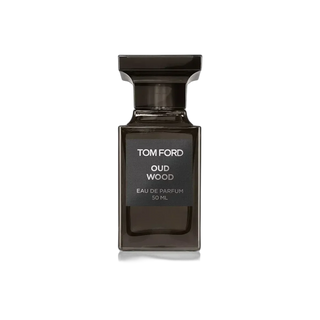
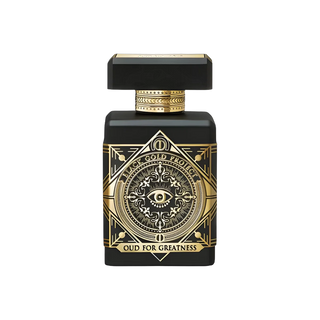
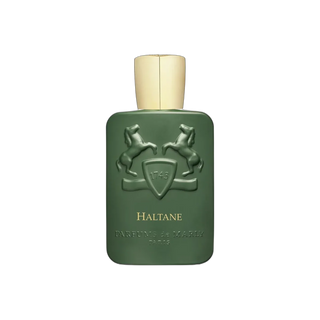
Compositions that do synthetic oud exceptionally well: Tom Ford Oud Wood, Initio Oud for Greatness, Mizensir Perfect Oud, and Parfums de Marly Haltane.
What bad synthetic oud smells like
The failure mode of synthetic oud is recognizable once you know the smell. It reads as:
- Sharp and piercing in the opening, almost chemical
- Flat and one-dimensional in the heart, no evolution over time
- Dry and lifeless in the base, like a wood-scented candle
- Sometimes with a note many describe as “wood polish” or “barbershop chair”
This profile almost always indicates overuse of Iso E Super without enough supporting aromachemicals to balance it. It is the telltale of cheap oud perfumery.
Once you have smelled three good oud compositions and three bad ones, you will never mistake the two again.
What real oud smells like that synthetic cannot
Real oud oil carries several qualities synthetic accords cannot currently replicate:
Complexity. Real oud contains between 150 and 300 volatile and semi-volatile compounds in specific ratios. The best synthetic accords use 10 to 15 aromachemicals. The difference is like the difference between a full orchestra and a chamber trio.
Animalic depth. The sesquiterpenes in real oud (agarospirol, jinkoheremol, agarofuran) create a low-register animal warmth that synthetics can approximate but not fully capture. This is the quality connoisseurs are chasing.
Evolution. Real oud changes dramatically over hours on skin, revealing different facets as the volatile top compounds evaporate and the heavier base molecules come forward. Synthetic accords tend to be more static.
Terroir. A Cambodian oud smells different from a Malaysian oud smells different from an Indian Assam oud. Synthetic accords can mimic the direction of each but cannot fully capture the specific character of each origin.
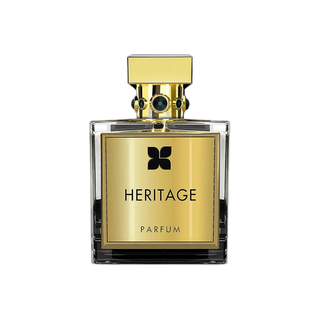
Fragrances that center real oud include Fragrance Du Bois Heritage Parfum, Amouage Outlands, Clive Christian Private Collection Oud, and Stephane Humbert Lucas God of Fire.
How to tell what is in your bottle without chemistry
There are no perfect tests, but there are strong indicators.
Price signal. Real oud is genuinely expensive. A bottle retailing under AED 800 cannot contain meaningful real oud percentages and still be profitable. A bottle above AED 2,500 usually does. A bottle above AED 5,000 usually centers real oud.
The animalic note test. Synthetic oud almost never produces a genuine animalic quality. If you smell a subtle barnyard or skin-scent edge in the heart of the composition, real oud is probably present.
The evolution test. Apply the fragrance at 9 am. Smell yourself at 3 pm. If the composition has changed noticeably in character, you likely have real oud. If it smells the same for twelve hours, it is probably mostly synthetic.
The batch consistency test. Over years and multiple bottles, a real-oud composition will vary slightly between batches. Perfumers who work with real materials know this. A synthetic composition will smell identical every time.
Price brackets and what they buy you

- Under AED 800. Almost entirely synthetic accord. Designer or mass market. Can still be beautiful. Do not pay niche prices for this.
- AED 800 to AED 1,500. Modern niche entry level. Synthetic accord dominant, small percentages of real oud possible. Good examples: Initio’s Oud for Greatness and Oud for Happiness.
- AED 1,500 to AED 3,000. Genuine oud-forward niche. Real oud is a meaningful component. Amouage Outlands, Parfums de Marly Haltane.
- AED 3,000 to AED 6,000. Heritage oud compositions with real oud as the central ingredient. Clive Christian, upper Fragrance Du Bois, Stephane Humbert Lucas.
- Above AED 6,000. Luxury market. Rare origins, aged oils, often limited edition. Almost always real oud dominant.
Is real always better?
No. Some of the greatest oud-themed perfumes of the last twenty years are mostly synthetic. Tom Ford Oud Wood was a category-defining release. Initio Oud for Greatness has sold millions of bottles. These compositions achieve artistic effects that pure oud oil would not improve.
Real oud is better when you specifically want what real oud offers: complexity, animalic depth, slow evolution, terroir. Synthetic oud is better when you want consistency, wearability, projection control, or simply a more accessible price point.
The question is never “which is better.” It is always “which is right for this wearer, this occasion, this moment.”
What to do with this information
If you have been buying oud bottles blind, use the price signal to set expectations. A AED 600 designer oud is not going to deliver the experience of a AED 3,000 heritage oud, and thinking it will is the fastest route to disappointment.
If you are a collector, wear both. Synthetic-led compositions teach you the vocabulary of oud perfumery at a price point that lets you experiment. Real-oud compositions teach you what the ingredient actually is, at the price point it genuinely costs.
Browse our Oud Perfumes collection organized by tier, or see our best oud perfumes 2026 list that mixes synthetic and real compositions across price tiers.
Frequently asked questions
Is synthetic oud bad for you?
No. The aromachemicals used in synthetic oud accords are regulated by IFRA (International Fragrance Association) and have safety data sheets. They are used safely in thousands of commercial perfumes.
Can I buy pure oud oil online?
Yes, from specialist attar houses in the Gulf, India, and some European importers. These are different products from finished perfumes. Pure oud oil is worn in drops, not sprays, and the experience is very different.
Why does my “oud” perfume smell like wood polish?
Overuse of Iso E Super without enough supporting aromachemicals. Common in lower-tier oud-themed releases. Not a real oud issue.
Is cultivated (plantation) oud as good as wild oud?
Modern plantation oud has closed most of the gap. Connoisseurs still prefer old wild oud for complexity. Plantation oud makes real oud available at prices that would otherwise be impossible.
Do all niche ouds contain real oud?
No. Many niche ouds are sophisticated synthetic compositions with minimal or no real oud content. Niche does not automatically mean real oud. The price, the brand’s transparency, and the perfumer’s reputation are better signals.
How do I know if a brand is honest about its oud content?
Houses that disclose real oud percentages are rare but exist. Fragrance Du Bois is the most transparent in the current market. Most houses keep formulations confidential for competitive reasons, but experienced wearers can usually tell.
Synthetic vs real oud at a glance
| Property | Synthetic oud accord | Real oud oil |
|---|---|---|
| Composition | 5-15 aromachemicals | 150-300 volatile compounds |
| Cost of raw material | Low, fraction of $1/g | USD 30-100/g at real quality |
| Consistency across batches | Identical every time | Varies by distillation |
| Evolution on skin | Largely static | Unfolds over hours |
| Animalic depth | Approximated | Uniquely present |
| Found in | Under AED 1,500 mostly | AED 2,500 and above |
Keep Reading
Shop the Scents
The fragrances featured in this piece, authentic and shipped worldwide to over 130 countries.