

Incense smells smoky, resinous and slightly citrusy, with a dry, meditative character that evokes churches, temples and stone-walled rooms. It is one of the oldest perfumery materials in recorded history.
Read more
The core ingredient is frankincense, also called olibanum, a gum resin tapped from Boswellia trees (Boswellia sacra in Oman, Boswellia carterii in Somalia, Boswellia serrata in India). The hardened tears are steam-distilled or solvent-extracted to produce essential oil, absolute and resinoid, each with a slightly different smoky-citrus-balsamic profile. Myrrh, benzoin, styrax and labdanum are often included under the broader 'incense' umbrella.
Incense sits in the base and lingers throughout. Perfumers use it to build meditative compositions (Avignon, Passage d'Enfer, Armani Prive Bois d'Encens), to add cool smoke to oud and rose, and to give gravitas to amber and leather bases.
Incense performs best in autumn, winter and cool evenings, and suits unisex and spiritually inflected signatures across East and West.
-

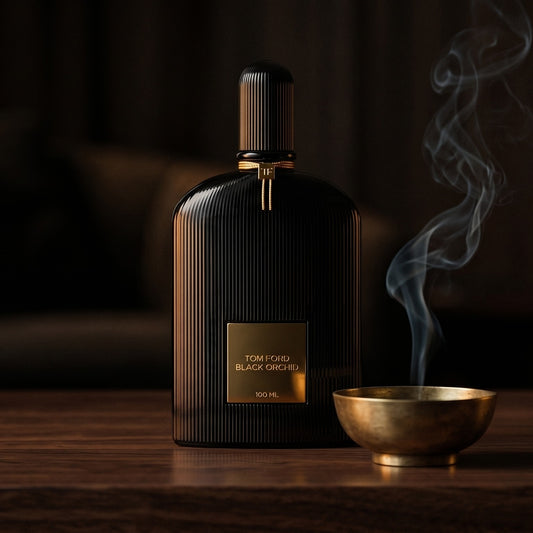
Tom Ford Black Orchid
Regular price Dhs.1,040.00Regular price

